






When doing a home cleaning project on their own, people often assume mixing two cleaning products will produce more effective results. And why not? If each cleaner works well on its own, wouldn’t combining them multiply the effect?
The answer is a strict NO.
Mixing cleaning products does not guarantee better results. More importantly, it can put your health and property at great risk. Some cleaning chemicals, when mixed, can release toxic gases, cause chemical burns, and damage your surfaces.
This is why experts recommend never mixing certain cleaning chemicals. Fumes or gases produced by the mixture can particularly affect children, pets, and the elderly in your home.
The good news? You don’t need to mix chemicals to maintain a clean home. Basic household cleaners are often sufficient, helping you avoid risks while keeping your living spaces spotless and hygienic. The BusyBees Dubai team explains the different chemical combinations with potential dangers and how to avoid them.
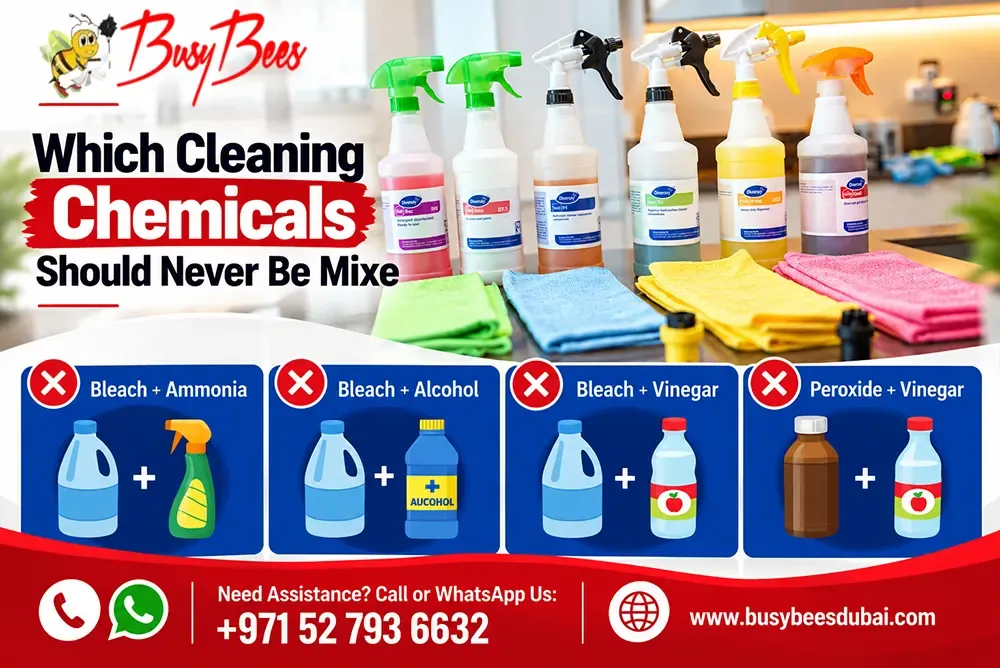
The Never-Mix Chemical List: Four Dangerous Combinations to Avoid
This professional checklist tells you about cleaning chemical combinations to avoid at home. Never knowingly combine these products, even in small amounts.
| Cleaning combination | Potential Danger | Possible symptoms |
| Bleach + ammonia | Toxic chloramine gases | Coughing, chest tightness, breathing difficulty |
| Bleach + vinegar or acids | Toxic chlorine gas | Burning eyes, throat irritation, coughing |
| Bleach + rubbing alcohol | Potential chloroform and other hazardous byproducts | Dizziness, nausea, confusion, irritation |
| Hydrogen peroxide + vinegar | Peracetic acid formation | Eye, skin, and respiratory irritation |
1. Bleach + Ammonia = Toxic Chloramine Gases
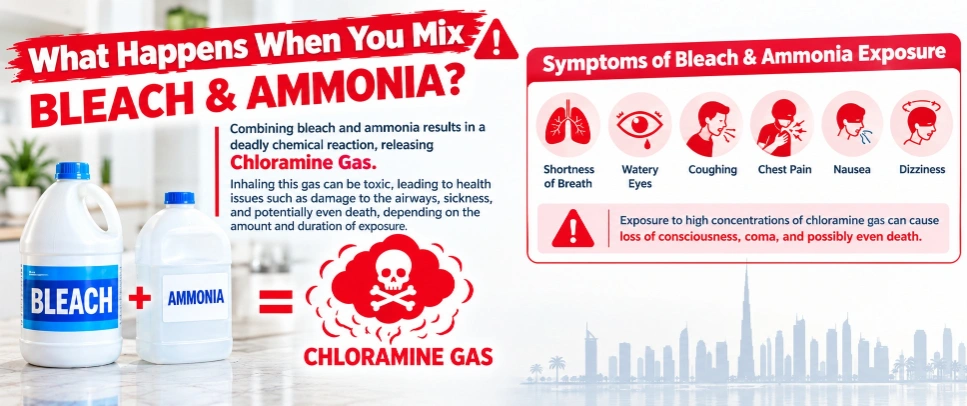
Household bleach contains sodium hypochlorite. Ammonia may be present in various household cleaners, degreasers, and other products.
Combining these two chemicals can release toxic chloramine gases. Direct contact can lead to watery eyes, coughing, wheezing, chest pain, and shortness of breath.
Severe direct exposure can cause serious lung injury. If symptoms do not fade naturally, visit an emergency room for treatment.
Never use an ammonia-based cleaner together with bleach. Always check product labels before buying or cleaning.
2. Bleach + Vinegar or Other Acids = Chlorine Gas
Vinegar is a common household acid found in toilet cleaners and limescale removers. Direct contact with bleach can release chlorine gas.
Why is it bad for you?
Chlorine gas can burn the eyes upon direct contact or irritate the throat and lungs if inhaled.
Common symptoms include scratchy eyes, a sore throat, coughing, chest tightness, and difficulty breathing.
Never mix vinegar with bleach or use an acidic toilet cleaner immediately after cleaning with bleach. Always follow the manufacturer’s instructions.
3. Bleach + Rubbing Alcohol = Hazardous Chemical Byproducts
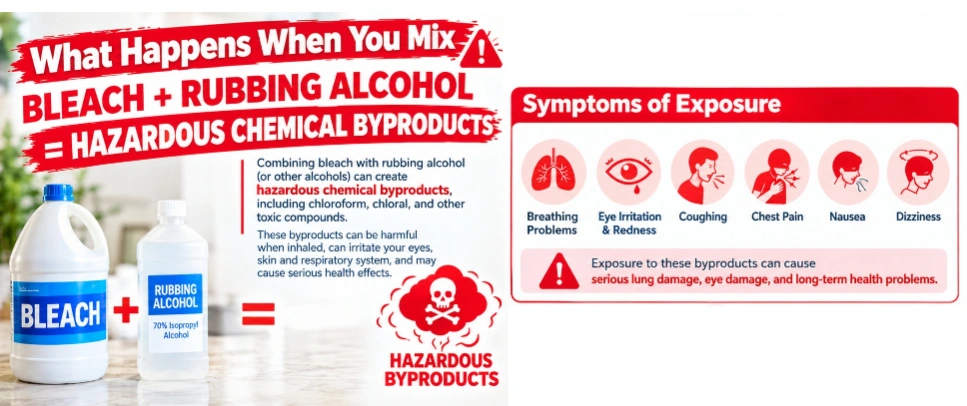
Combining bleach with rubbing alcohol (isopropyl alcohol or ethanol) can produce chloroform and other hazardous materials, depending on the concentration or specific conditions.
Direct exposure may affect the respiratory and nervous systems. Other symptoms include dizziness, nausea, headaches, and confusion.
Severe exposure can lead to more serious or long-term effects.
Keep bleach and alcohol-based cleaners separate. Never try to mix them to make a stronger disinfectant.
4. Hydrogen Peroxide + Vinegar = Peracetic Acid
Hydrogen peroxide and vinegar are both popular eco-friendly household cleaners that work great as separate products. However, if you accidentally or knowingly mix them, it can form peracetic acid, a strong irritant.
Potential dangers include irritation to the eyes, skin, and respiratory tract.
Use each product separately and follow instructions on the label. Never combine them directly.
Hidden Dangers: It’s Not Just About Mixing Chemicals Directly
One common mistake many people make is to assume that a dangerous reaction only occurs when you directly mix two products in a container.
While it’s true that directly mixing the above chemicals can be extremely dangerous, even minor accidental mixing or overlap can have significant effects. For instance, cleaning a surface with one chemical and immediately following up with another can also create a hazardous byproduct.
For example, you might clean a toilet bowl with bleach first and then apply an acidic toilet cleaner. Bleach residue left in the bowl can react with the acid and create chlorine gas.
To reduce the risk:
- Always read the label for instructions to use a cleaning product.
- Never mix different cleaners to remove a stubborn stain.
- Rinse surfaces thoroughly before switching products.
- Allow surfaces to dry properly and ensure good ventilation.
Remember, rinsing is good, but it cannot completely protect you from the side effects of a chemical mix-up.
What to Do If You Accidentally Mix Cleaning Chemicals
If you notice any of the above symptoms after using cleaning products, act quickly to minimize damage.
Step 1: Immediately Leave the Area
Ensure everyone, especially children and pets, is away from the affected space. Do not try to identify the gas by smell or color.
Step 2: Avoid Further Exposure
Stop mixing or cleaning immediately. Do not try to neutralize the mixture by adding water or another product. Do not lean over the container or surface. Do not try to clean up the mixture. JUST LEAVE.
Step 3: Ventilate Only If It’s Safe
If you can open doors or windows without risking further exposure to fumes, do so. Do not re-enter to open windows or switch on a fan.
Step 4: Contact Emergency Services or Poison Control
Call your local or medical emergency number if anyone has severe eye or skin irritation, trouble breathing, chest pain, coughing, confusion, or other serious symptoms.
In Dubai, Medical or ambulance support is available at 998. Elsewhere, contact your local poison information service or emergency medical service.
Follow professional advice and instructions strictly to minimize long-term risks.
Step 5: Get Medical Help When Needed
Some effects of inhaling toxic gases can occur hours after the exposure. If you notice any symptoms, seek urgent medical attention or visit a clinic for consultation.
If a chemical comes into direct contact with eyes or skin, rinse immediately with plain water and check the product label for first-aid directions. Contact a medical professional for guidance.
Safe Cleaning Alternatives That Work Better
Keeping your home clean doesn’t require combining powerful chemicals that can compromise your safety. Here are 6 expert-recommended alternatives for safe and effective home cleaning:
- For everyday dirt: Warm water + ordinary dish soap or a household detergent.
- For disinfection: Any approved disinfectant for the surface. Follow its label for instructions and the required contact time.
- For bathroom buildup: Any eco-friendly limescale remover or toilet cleaner.
- For kitchen grease: A kitchen degreaser or detergent. Professionals use steam cleaning or a similar approach.
- For glass and mirrors: Use a glass cleaner with a clean microfiber cloth.
- Pro Tip: Allowing sufficient dwell time is far more effective than mixing chemicals.
Conclusion
Mixing cleaning products to get better results often backfires, creating dangerous chemicals and wasting money. Using the right product correctly is almost always more effective.
Remember the four major hazardous combinations explained in this article: bleach with ammonia, bleach with acids such as vinegar, bleach with rubbing alcohol, and hydrogen peroxide with vinegar. Use products separately, always read their labels, and never apply a second cleaner over a product’s residue. Rinse thoroughly and let it dry if you need to use another chemical on a surface.
If you need professional assistance or are searching for a trusted cleaning service in Dubai that uses eco-friendly cleaning products, contact BusyBees at +971 52 793 6632 for a free quote.

When the dust settles, BusyBees steps in. We are the #1 trusted post-construction cleaning services company in the UAE, helping Read more

Dubai’s iconic skyline and luxurious villas deserve crystal-clear windows and glass that reflect their persistent beauty. Whether it’s a commercial Read more

Dubai, one of the most famous cities in the world, is home to people from diverse cultures and backgrounds. Due Read more

Whether it’s your home or workplace, routine cleaning isn’t just about making your place look attractive—it’s about maintaining a hygienic, Read more
