





Dubai summers are extremely hot and humid, causing intense pressure on mechanical systems such as your AC ducting. Between May and August, outdoor temperatures consistently exceed 43°C (110°F), while humidity levels in coastal areas frequently surpass 75%. This affects the indoor environment as well.
With Dubai residents spending over 90% of their time indoors, residential and commercial HVAC systems have to work twice as hard to maintain suitable indoor temperatures at 22°C. This load is further intensified when the AC ducts are continuously dirty or in poor condition, which reduces productivity.
Dubai Summer HVAC Stress Factors:
Outside Air: 43°C+ (110°F) | Relative Humidity: 75%+
Inside Air Target: 22°C (71.6°F)
| Environment Indicator | Outdoor Conditions (May–August) | Indoor Target Levels | The System Impact |
| Temperature | 43°C+ (110°F+) | 22°C (71.6°F) | ~20°C Gap: Triggers severe, constant condensation inside the system. |
| Relative Humidity | 75%+ (Coastal areas) | Controlled/Low | Bio-Growth Risk: Moisture mixes with desert dust to create a breeding ground for mold. |
Result: Almost 20°C gap between outdoor and indoor temperatures causes constant condensation. This, combined with continuous use of air conditioning, leads to a high bio-growth risk.
When an HVAC system runs constantly, the cooling coils produce massive volumes of condensation. Fine desert dust accumulated inside your ductwork mixes with condensation to form a thick, sticky layer that adheres to duct walls. This serves as an ideal breeding ground for mold, bacteria, and dust mites.
Pre-summer AC duct deep cleaning is not an aesthetic choice; it is a mechanical and medical necessity.
The Physics of Indoor Air Quality (IAQ) in Sealed Dubai Homes
Modern villas and high-rise apartments in Dubai (such as those in Dubai Marina, Downtown, or Arabian Ranches) are constructed as sealed environments to maximize energy efficiency. This permanently traps indoor pollutants.
According to data from the World Health Organization (WHO), indoor air can be up to five times more polluted than outdoor air.
How Dirty AC Ducts Lead to Poor IAQ
Fine desert dust from the outside, human skin scales, pet dander, and clothing fibers bypass standard HVAC filters, which can capture only large particles but allow PM2.5 particles to slip through. These dust particles settle inside the ducts.
Every time you turn the AC blower on, microscopic particles, including mold spores, volatile organic compounds (VOCs), and allergens from this stashed pile, are blasted directly into the indoor air. This leads to a phenomenon called Sick Building Syndrome (SBS), where residents experience chronic headaches, dry throats, cough, unexplained fatigue, and allergies.
Routine HVAC cleaning by a professional removes the accumulation of dust particles and allergens inside your HVAC system and restores fresh indoor air flow.
Energy Consumption and Compressor Lifespans
Neglecting AC maintenance directly impacts your Dewa (Dubai Electricity and Water Authority) bill.
Airflow Restriction and Added Pressure
HVAC systems follow a specific cubic feet per minute (CFM) airflow standard to ensure efficient cooling. Even a thin layer of dust and bio-growth inside a duct can restrict airflow through the pipe and increase pressure on the system.
To compensate for the restricted airflow, the fan motor must draw more power to maintain efficient cooling levels.
Dust accumulated on the evaporator coils acts as an insulator between the cooling lines and the air, preventing the system from lowering the air temperature effectively.
- Clean AC ducts: Quick thermal drop; reduced compressor load.
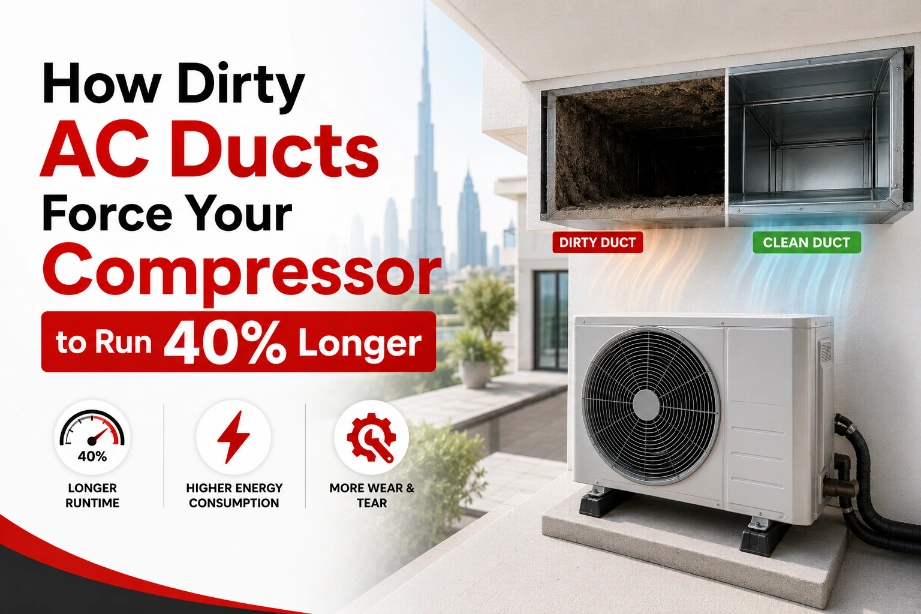
- Dirty ducting: Runs 30–40% longer per cycle to reach the same temperature.
| Air Duct Status | System Airflow (CFM) | Compressor Cycle Length | Impact on DEWA Bill & Equipment |
| Clean AC Ducts | Unrestricted / Standard | Quick thermal drop; normal cycles | Lower monthly utility bills; maximized compressor lifespan. |
| Dirty AC Ducts | Restricted due to dust/bio-growth | Runs 30% to 40% longer per cycle | Higher monthly DEWA bills; premature compressor failure. |
While the immediate financial impact can be seen in monthly utility bills, the long-term impact includes premature failure of the compressor (the most expensive component of an HVAC unit) due to constant overuse in a 45°C Dubai summer.
The Health Factor: Mold, Dust Mites, and Allergies
“Dubai Cough” is a condition that refers to a persistent, dry, or tickly cough, often cited as a respiratory inflammatory response to trapped indoor allergens and particulate matter circulating through poorly maintained AC systems.
The most common fungal strain found in uncleaned AC ducts is Aspergillus. In people with weak immune systems, young children, or the elderly, constant exposure to these mold spores can lead to Aspergillosis, a serious respiratory condition, chronic sinusitis, and asthma problems.
Humid environments inside uncleaned AC ducts make the perfect breeding grounds for the growth of dust mites. They thrive on the human skin flakes trapped in the duct dust and release highly allergenic proteins. When airborne, these can trigger immediate allergic reactions, including watery eyes, sneezing, and trouble sleeping.
Routine professional AC duct cleaning removes both mold and dust mites at the source and prevents their recurrence.
| Biological Contaminant | Source / Trigger in Ducts | Health Condition / Symptoms | Vulnerable Risk Groups |
| Aspergillus (Fungal Strain) | Uncleaned ducts with trapped condensation. | Aspergillosis, chronic sinusitis, asthma flare-ups. | Young children, the elderly, individuals with weak immune systems. |
| Dust Mites | Human skin flakes trapped in accumulated duct dust. | Watery eyes, sneezing, persistent coughing, sleeping trouble. | General residents, allergy sufferers. |
| Particulate Matter (PM2.5 & VOCs) | Re-circulated pile blasted into air by the AC blower. | “Dubai Cough” & Sick Building Syndrome (headaches, fatigue, dry throat). | Residents spending 90%+ of their time indoors. |
The Right Way of Cleaning AC Ducts
The National Air Duct Cleaners Association (NADCA) recommends a highly effective air duct cleaning process combining mechanical agitation with professional sanitization using eco-friendly methods. Quick Flush, offered by some cheap AC cleaning services, involves the use of hazardous sanitization sprays that can worsen air quality.
| Cleaning Stage | Cheap “Quick-Flush” Services (What to Avoid) | Professional NADCA Protocol (The Right Way) |
| 1. Assessment | No prior evaluation. | Inspection: Uses robotic crawler cameras or manual verification. |
| 2. Containment | Spreads loosened dust into the living space. | Isolation: High-power HEPA vacuums create a negative pressure zone. |
| 3. Removal Method | Sprays chemical disinfectant directly onto dry dust. | Mechanical Agitation: Specialized rotary brushes physically scrub debris. |
| 4. Extraction | Leftover wet mud remains inside the duct walls. | Extraction & Disinfection: Debris is vacuumed out; coils, trays, and fans are pressure-washed. |
| Long-Term Result | Accelerates mold growth and worsens indoor air quality. | Restores fresh airflow, removes allergens, and boosts system efficiency. |
Why Avoid Cheap Sanitization Sprays
If a provider simply recommends spraying a disinfectant down your vents without physically brushing the ducts, avoid them. Spraying moisture onto accumulated layers of dust will create a wet mud inside the AC walls, further accelerating mold growth.
The Correct NADCA Protocol
A professional duct cleaning service follows a systematic approach:
- Inspection: Technicians use robotic crawler cameras or manually check the contamination levels.
- Isolation and Negative Pressure: The team uses a high-power vacuum equipped with a HEPA (High-Efficiency Particulate Air) filter to create a negative pressure zone, trapping even the tiniest dust particles.
- Mechanical Agitation: Cleaners use specialized rotary brushes to scrub and physically dislodge trapped dust from the surfaces.
- Extraction: The negative pressure vacuum extracts the loosened debris directly into the collection containment unit.
- Disinfection: Then, the duct is pressure-washed to remove remaining debris. Technicians then disinfect the evaporator coils, drainage trays, and blower fans.
| Property / Facility Type | Recommended Cleaning Frequency | Why This Frequency is Required |
| Restaurants / Clinics / Nurseries | Every 3–6 months | High strictness for hygiene, food particles, and protecting vulnerable groups (children/patients). |
| Commercial Offices / Shops | Every 6–12 months | Higher foot traffic, continuous daytime usage, and compliance with indoor productivity standards. |
| Residential Apartments / Villas | Once every 12 months | Standard maintenance cycle to clear accumulated desert dust and winter condensation before summer peaks. |
Conclusion: Importance of Professional AC Duct Cleaning in Dubai
To maintain a healthy indoor environment, reduce health risks, and boost equipment performance and lifespan, schedule a professional AC duct cleaning service from a trusted provider like BusyBees once every 6 months or so.
Air duct cleaning in Dubai is beneficial and not an expense; it’s a necessary investment in your family’s health and safety when spending time indoors. Professional AC maintenance lowers your Dewa bills and ensures you and your HVAC system survive the harsh Dubai summer.

When the dust settles, BusyBees steps in. We are the #1 trusted post-construction cleaning services company in the UAE, helping Read more

Dubai’s iconic skyline and luxurious villas deserve crystal-clear windows and glass that reflect their persistent beauty. Whether it’s a commercial Read more

Dubai, one of the most famous cities in the world, is home to people from diverse cultures and backgrounds. Due Read more

Whether it’s your home or workplace, routine cleaning isn’t just about making your place look attractive—it’s about maintaining a hygienic, Read more
